



Program Overview
MCC’s $365.2 million El Salvador Investment Compact 2015-2020) funded the $125 million Logistical Infrastructure Project to widen the Coastal Highway and reconstruct the international border crossing with Honduras. The project was based on the theory that these investments would reduce logistical and transportation costs to increase investment and productivity in the trade of goods. MCC also funded reconstruction of the international border crossing with Guatemala as part of the El Salvador Investment Challenge under the Investment Climate Project. The Guatemala border crossing was a similar investment and provides a useful comparison within the evaluation.
Download the Spanish translated evaluation brief.
Evaluator Description
MCC commissioned CH2M HILL, Inc to conduct an independent final evaluation of the Logistical Infrastructure Project and the Investment Climate Project sub-activity at the Anguiatú Border. Full report results and learning: https://evidence.mcc.gov/evaluations/index.php/catalog/263.
Key Findings
Results for the Coastal Highway
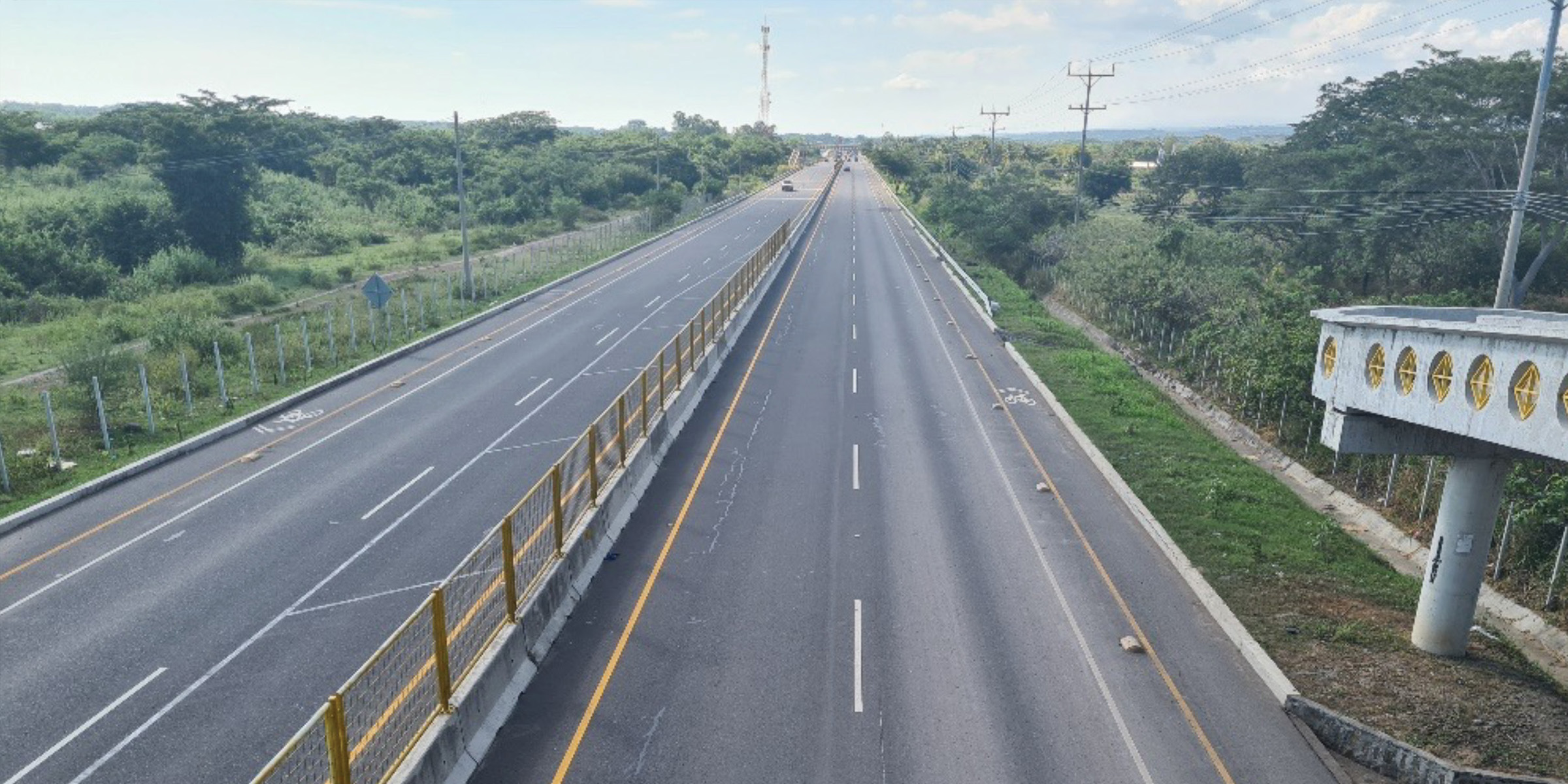
- The project improved 27 kilometers (km) of the Coastal Highway to a four-lane divided highway, enabling faster travel and easier overtaking.
- Traffic volume substantially increased, especially in travel to the capital San Salvador from the Department of La Paz.
- Some traffic growth is attributed to the improved national security environment.
Impact on Border Crossing Times with Honduras
- The project improved 5 km of highway at the El Amatillo Border Crossing with Honduras, rebuilt the El Amatillo border crossing facility for trucks, and modernized customs computer systems. The new facility enables joint operations with Honduran Customs, a first in central America.
- One year after the compact ended, no IPP transactions closed, and one was canceled before financial close.
Impact on Border Crossing Times with Guatemala
- The El Salvador Investment Challenge activity reconstructed the Anguiatú Border Crossing, equipped it with new customs systems, and staffed the booths with personnel from both countries.
- Crossing times at the Anguiatú Border Crossing have decreased by 10 minutes to 3.5 hours.
Evaluation Questions
This final performance evaluation was designed to answer athe following main questions:
- 1
Was the Logistical Infrastructure Project implemented as planned? - 2
Who is travelling on the road and how long does it take to move along key routes? And how has this changed? - 3
How have the border crossings performed since the project was completed?
Detailed Findings
Results for the Coastal Highway
The Coastal Highway Expansion was implemented without any major change in quality or scope. As planned, 24 km were widened to a four-lane divided highway with the speed limit increased to 90 kilometers per hour (kph), and a further 3 km were rehabilitated to provide a cycling/walking shoulder. The budget was $111.25 million but the winning contractor’s bid was lower, and, allowing for contract amendments, the final costs came to $85.1 million, a saving of approximately $13.4 million.
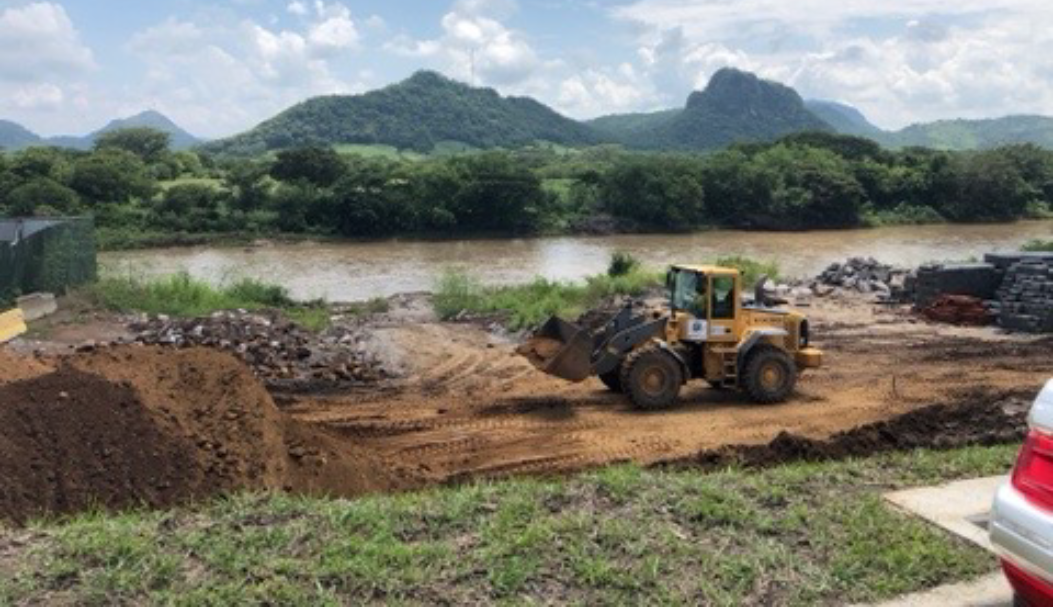
Land clearance work at El Amatillo in preparation for construction of new freight border facility.
MCC’s widening of the highway has led to a 92% increase in traffic, higher than the original forecast of 69%. Traffic growth for the shorter rehabilitated section is 33%, again higher than the original targets. The highway is being used for commuting, leisure, and inter-urban travel. The hourly demand profile for a weekday shows distinct peaks characteristic of commuting. Almost 90% of vehicles are cars, pickups, and minivans. Trucks account for 8%-11%, and buses (autobus and microbus) make up the rest. Surveys show a significant increase in travel to the capital San Salvador from the Department of La Paz with its regional capital of Zacatecoluca, as well as an increase in local traffic.
Two other factors have also influenced the increases in travel demand. First, there has been a reduction in gang-related violence, allowing travel after dark. The second contributing factor is increased motorization, linked to higher disposable income resulting from economic growth. As El Salvador’s economy has recovered, there has been an increase in car ownership as cars and pickups are now more available and affordable.
Impacts on the Border Crossing with Honduras
The Border Crossing Infrastructure at El Amatillo was completed, including rehabilitating 5.74 km of highway from Agua Salada to El Amatillo and modernizing freight border crossing facilities including new customs systems to reduce paperwork. The new freight border facilities officially opened on November 7, 2022. The joint customs operations with Honduras began in December 2023 and were an important milestone for Central America. The border crossing had a budget of $23.7 million, but the final cost exceeded this by $9.7 million. $2.5 million of the budget was devoted to the development of the ‘single window’ initiative, which is being rolled out to other border crossings, allows exporters to provide their information only once to be processed.
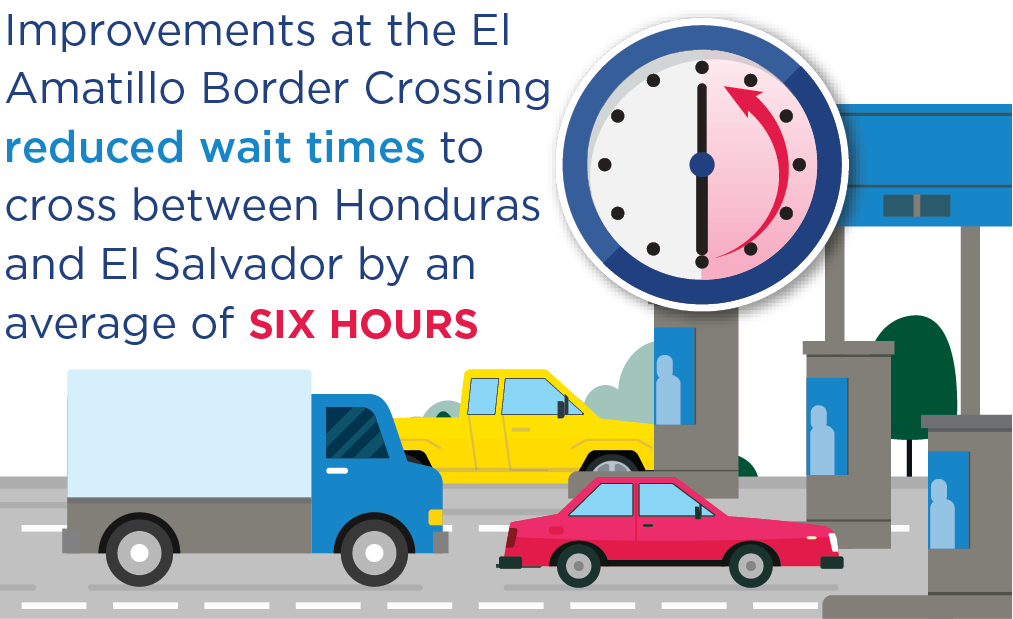
MCC’s investment at the border has led to a transformational change in the average time to clear customs formalities at El Amatillo. Time-savings are measured in hours rather than minutes, with savings between 4 hours 44 minutes and 6 hours 27 minutes, depending on whether cargo are in transit or for export.
Impacts on the Border Crossing with Guatemala
Time-savings are smaller at Anguiatú but still large at up to 3 hours 29 minutes, but savings are smaller for cargo in transit. Time savings are lower because it was already mandatory for exports in transit to first visit the Santa Ana Land Customs in advance of reaching Anguiatu, hence even before upgrading, trucks arrived with the validated paperwork. There is no equivalent requirement at El Amatillo and thus delays were caused by trucks arriving with incomplete or even no paperwork.
Electric Utility Operations and Performance
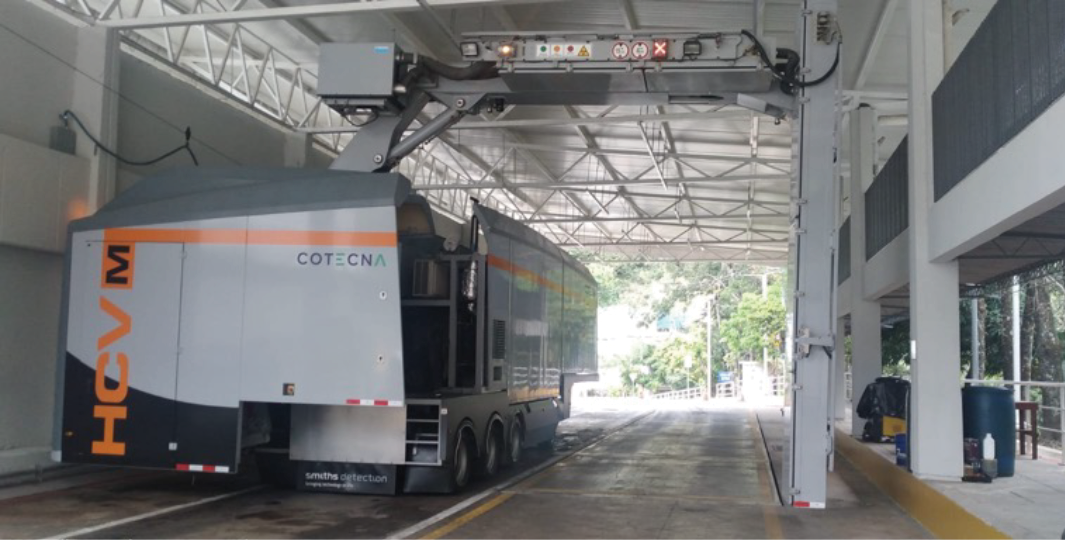
Truck scanner at Anguiatú. Photo shows a large machine capable of scanning an entire truck in a single pass.
Economic Rate of Return
MCC considers a 10% economic rate of return (ERR) as the threshold to proceed with investment. ERR’s for the Logistical Infrastructure Project was:
- 20.3%
Original ERR - 28.3%
Evaluation-Based ERR
The evaluation-based ERR is higher due to several reasons. Highway construction costs were lower than budgeted which are attributed to MCC’s insistence on seeking international bidders to increase competition for the highway construction contract. Traffic is well above original forecasts, giving higher benefits. Higher levels of traffic are attributed to reduced journey times between San Salvador and Zacatecoluca, an improved security environment facilitating more travel nationally, and increased motorization. For the border crossing with Honduras, whilst investment costs were higher than budgeted, average wait times at the border are now lower than originally forecast, pushing the ERR above the minimum required 10%. The HDM4 model was not calibrated ex-ante, which also could contribute to the difference in ERR.
An ERR was not calculated for Anguiatu border crossing with Guatemala due to limitations in the data supplied by Dirección General de Aduanas (Director General of Customs).Economic Rate of Return
The single-window customs initiative took a great deal of coordination but was ultimately successful. Once it was possible to implement, electronic processing at both the Honduras and Guatemala borders saved hours in wait times.
Country commitment is critical to success. The Government of El Salvador finished improvements at both border crossings with roughly $50 million of its own funding
Evaluation Methods
MCC analyzed the results of completed transport evaluations to produce the Principles into Practice: Lessons from MCC’s Investments in Roads. One lesson was to use HDM-4 to standardize evaluations for road projects. This performance evaluation used HDM-4 to model reductions in transportation costs.
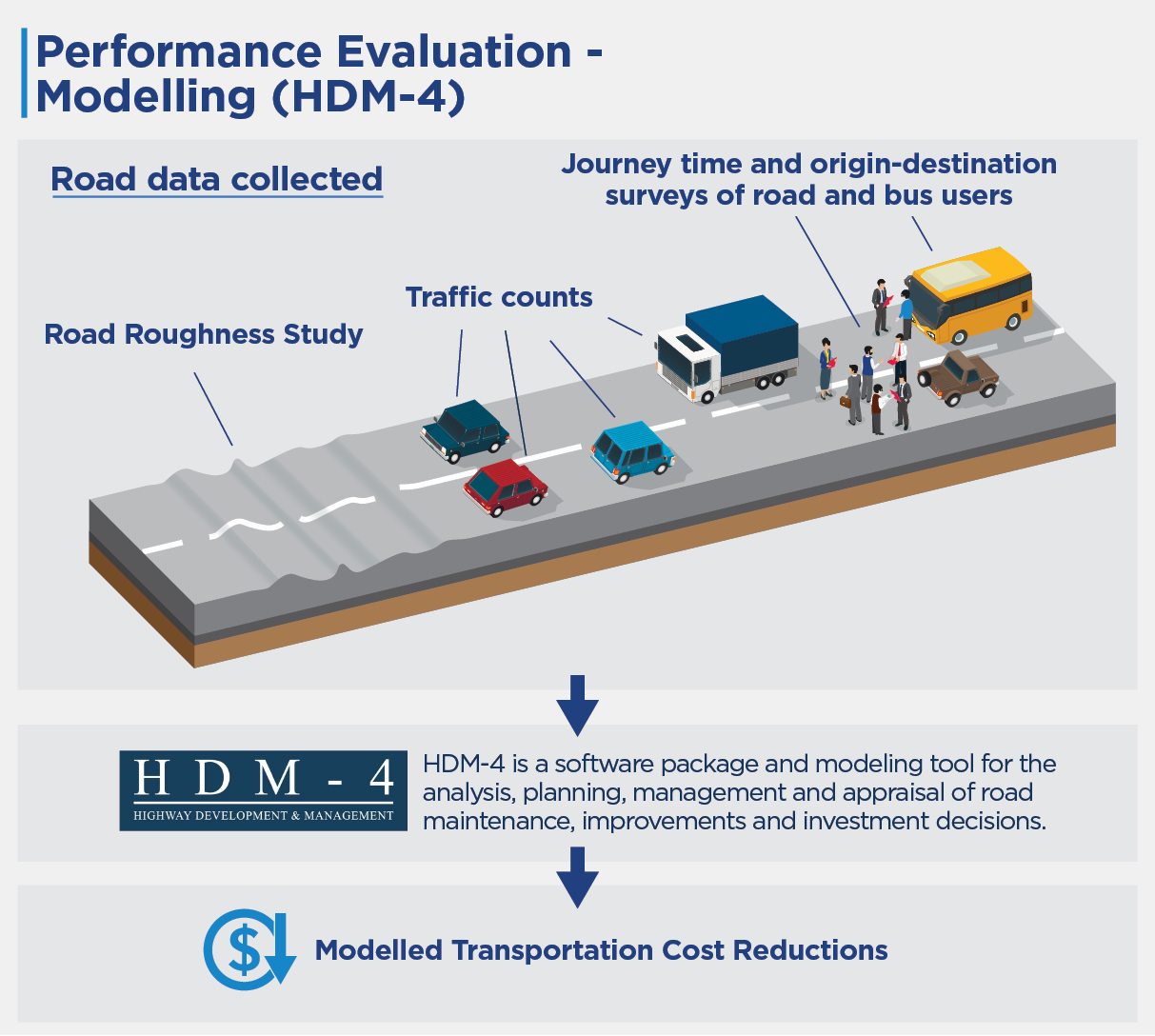
Quantitative data collected included road roughness to estimate the international roughness index. Journey time and origin-destination surveys of road and bus users were undertaken in November 2022, as well as traffic counts at various locations along the highway to build a pattern of road usage. More traffic counts were undertaken in December 2023 to produce an expanded time-series and estimate year-on-year growth.
The Dirección General de Aduanas de la República de El Salvador (DGA) provided secondary data for El Amatillo and Anguiatu. DGA’s data provides estimates of the average time to complete Customs and Immigration checks, before and after the improvements.
Qualitative data collection included 28 interviews with 24 respondents conducted between December 2020 and March 2021 to understand road maintenance activities. Further stakeholder interviews were held with local bus companies, trucking companies, and the Vice Ministry of Transport in December 2023 to build a picture of the local transportation market.
The road improvements were largely complete in late 2020 and the final round of data collected in December 2023, giving an exposure period of approximately three years. Border crossing improvements were completed in late 2022 with DGA data available until July 2024, giving an exposure period of 20–23 months.