



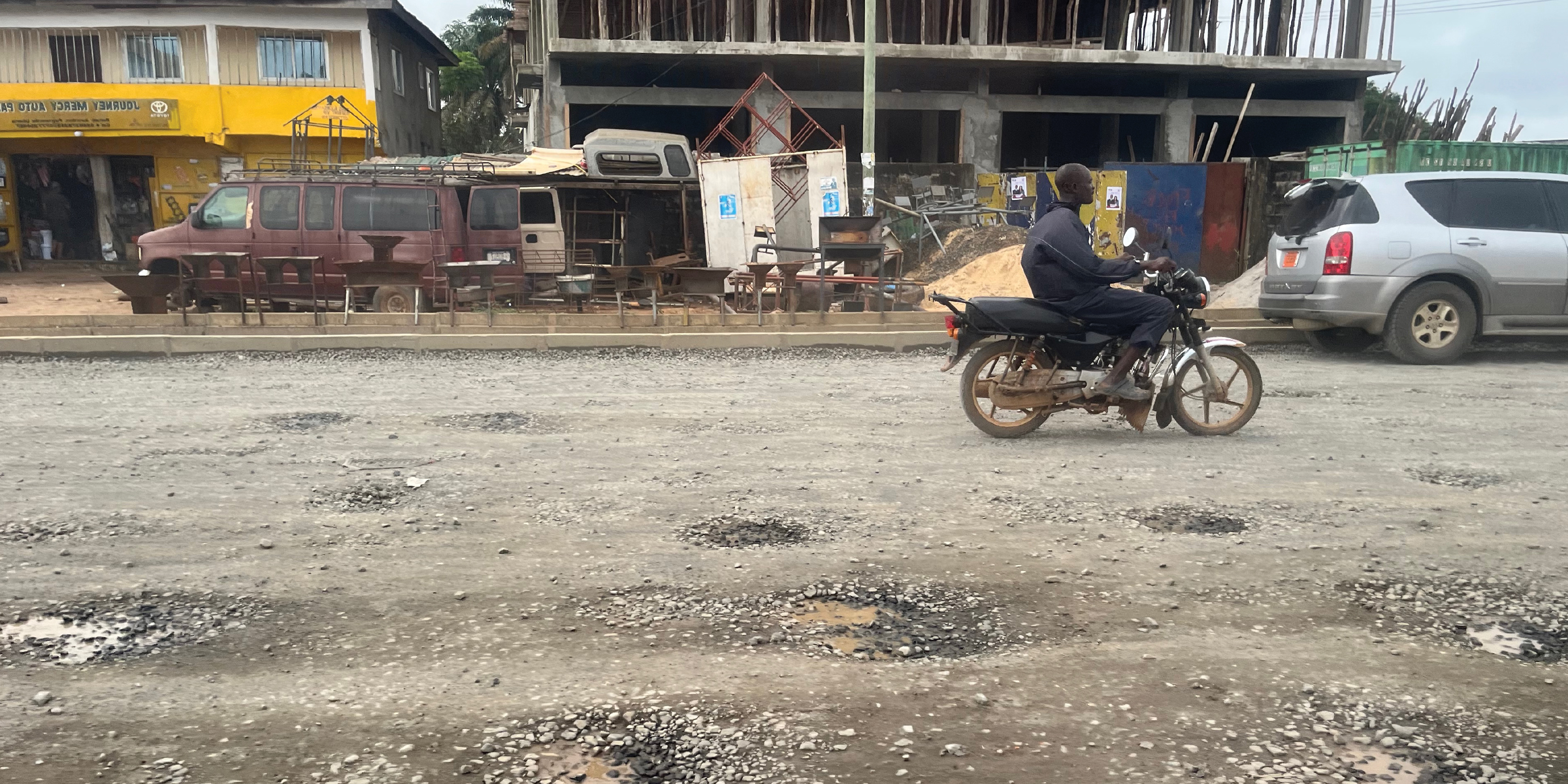
Program Overview
MCC’s $238 million Liberia Compact (2016-2021) funded the $21 million Roads Project, which aimed to improve the planning and execution of routine, periodic and emergency road maintenance. When critical reforms stalled, the Roads Project was reduced to $4.9 million and focused on training government staff and private contractors to collect data for road network analysis. This project emphasized the importance of road maintenance planning based on the theory that improved management of the roads sector would lead to improved quality and prolonged life of the road network in Liberia.
Evaluator Description
MCC commissioned International Development Group LLC to conduct an independent performance evaluation of the Roads Project. Full report results and learning: https://evidence.mcc.gov/evaluations/index.php/catalog/259.
Key Findings
Road Maintenance Priorities Influenced by Politics
- MCC provided a road management software system and trained engineers in its use. The Ministry of Public Works used it once for maintenance planning in 2019, but not since.
- Government decision-makers prioritized rehabilitation and construction over road maintenance. Without proper maintenance, the value of road investments are quickly lost.
- Stakeholders said the MCC-recommended road maintenance prioritization method is unrealistic given political realities.
National Road Fund Compromised by Underfunding
- In 2019 the Government was late in transferring the fuel levy to the National Road Fund (NRF), leading MCC to suspend the Road Maintenance Sub-Activity. This diminished MCC’s influence with the Government.
- Audits show the Ministry of Finance withheld nearly USD $25 million in earmarked revenue to the Fund between 2018 and 2020.
- Late payments to road contractors delayed maintenance.
- Nine firms had fuel tax arrears of USD $22.2 million as of 2022.
- The most recent budget (2022) is less than half the minimum for road needs, and 25% lower than prior years.
Weaker Organizational Capacity after Roads Project
- On average, Ministry of Public Works staff scored their agency’s road maintenance capacity lower than prior to MCC-funded training.
Evaluation Questions
This final performance evaluation was designed to investigate the road maintenance regime in Liberia by answering the following questions:
- 1
What is the economic return of the road maintenance investments? What factors drove changes to the ERRs? How could the project have been designed to result in a higher ERR? - 2
How were routine, periodic, and emergency maintenance works planned and executed by the Government before and after the compact? Were there improvements? - 3
What are the relevant road authority’s maintenance practices? How have these changed since the beginning of the compact? - 4
What organizational, political, and economic factors are shaping road maintenance decisions and practices in Liberia?
Detailed Findings
These findings build upon the interim evaluation report results published in 2021.
Road Maintenance Priorities Influenced by Politics
The gains observed at the interim evaluation have mostly eroded in the face of political challenges. While capacity still nominally remains in the Government of Liberia to employ the HDM-4 management system to capture data on road conditions, data were collected only once in 2019. To date, no annual maintenance plan has been created using road data and HDM-4. Key institutions and legislation backed by MCC—the Road Agency and the Road Agency Act—never materialized, leaving road maintenance within a weak regulatory framework.

Breakdowns in MCC-established Liberia roads maintenance procedure at endline (2023).
Key conditions to MCC’s continued funding were not met by the Government of Liberia, leading to reduced impact. The Government of Liberia did not deposit the fuel levy into the National Road Fund as agreed, leading MCC to suspend matching funds in 2019. The elimination of the matching funds reduced incentives for the Government of Liberia to follow the MCC-supported, data-driven maintenance regime.
In practice, the decision-making process around roads has been highly political. According to several knowledgeable respondents, no road data collection was done and the new software was not used in maintenance planning from 2020-2023; these decisions have been made at political levels since the end of the MCC Compact.
While there was broad agreement that the data were valuable as a decision-making tool, respondents disagreed with the premise that decisions should be based solely on data. Having no mechanism to incorporate political and social considerations into road maintenance planning was viewed as unrealistic, and misaligned with the country’s needs. Given the very poor condition of the country’s roads since the end of the civil war in 2003, respondents felt the limit placed on rehabilitation funds (40% of the overall NRF budget) was low compared to the needs.
National Road Fund Compromised by Underfunding
With support from the Roads Project, Liberia established the National Road Fund – with mixed results. The revenue sources and funds dedicated to maintenance in the Road Fund Act were insufficient, but an improvement over previous funding levels. Since the end of the compact, a significant portion of these funds were diverted to other uses, particularly road construction and rehabilitation.
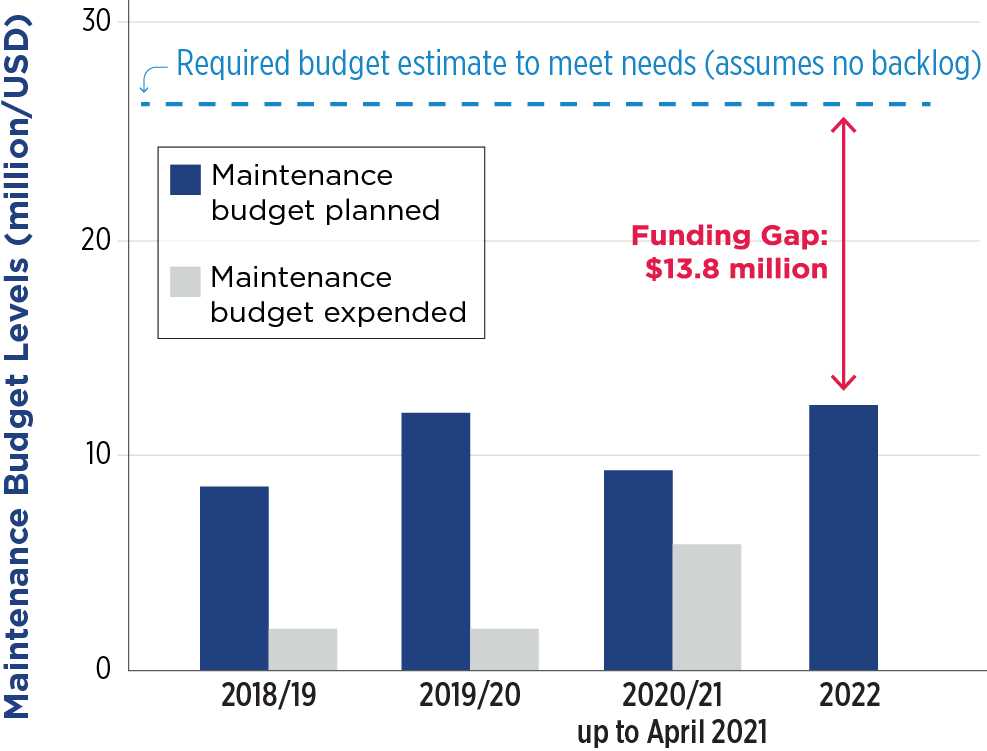
Road maintenance budget: planned, expended, required (2108-2022)
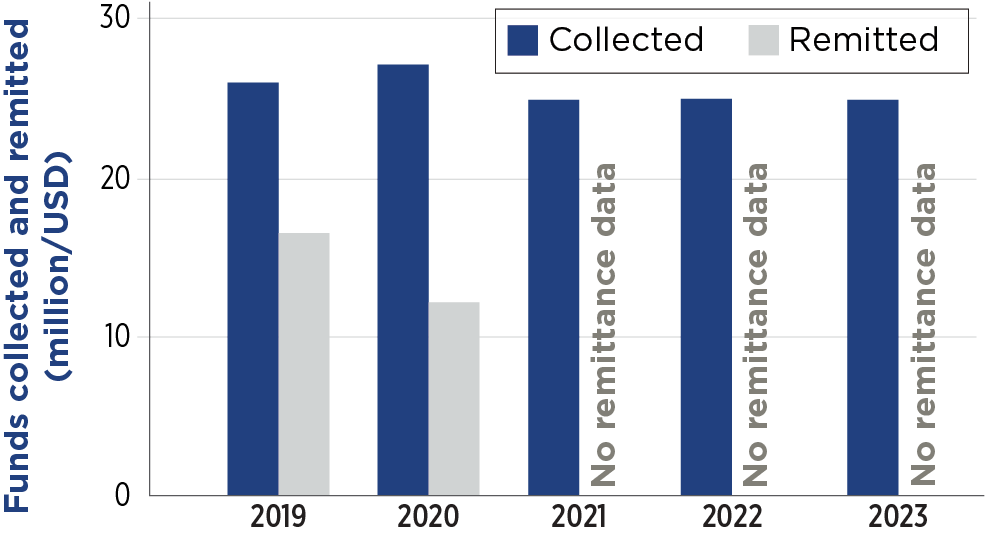
Fuel levies collected and remitted to NRF
The intention of the National Road Fund Act was to create an autonomous Road Fund, but the final text of the law reduced that autonomy. Revenue earmarked for maintenance is not promptly or completely transferred to the National Road Fund. Government of Liberia audits uncovered that substantial sums ($25 million USD) were collected but never sent to the National Road Fund from 2018-2020. Ongoing arrears and accounts payable reveal a weak enforcement system.
The maintenance budget is well below optimal. The evaluation team estimated a required annual maintenance budget of about USD $26 million, but the latest budget (2022) was less than half this amount. Maintenance funding improved with the advent of the Road Fund and the 2020/21 budget allotted USD $16.8 million for maintenance. But the 2022 budget showed a 25% decline, to USD $12.5 million. Similarly, funding for periodic maintenance dropped over 50%, from USD $10 million to USD $4.9 million. Actual maintenance expenditures have been consistently less than what was proposed in the budgets from 2018/2019 to April 2021, at only 28.1%, compared to the 63.4% spent on rehabilitation.
Weaker Organizational Capacity after Roads Project
The skillsets fostered in MCC’s programming have waned, according to respondents’ self-reports, despite improvements at the interim stage. On average, respondents scored key road maintenance planning-related categories such as regulatory capacity, staffing and recruiting, and IT systems lower than at baseline. Many trained staff remain at the Ministry of Public Works but have not practiced the skills learned from MCC’s technical assistance since 2019. Hardware and software to assist maintenance planning remain unused since 2019. Capacity created among private sector consulting firms to perform data collection for maintenance has similarly not been used since 2018 because the government has not contracted them.
Economic Rate of Return
An economic rate of return (ERR) was not calculated at the time of compact signing due to insufficient project design, a problem which persisted as the Roads Project was descoped. The independent evaluation’s planned economic analysis was not conducted as the expected benefits of the reform scenario did not materialize. Although the 2019 maintenance plan was developed using HDM-4 and RAMS software, it was not used for budgeting or implementation, leaving no basis to compare the reform case with the base case scenario of random prioritization. While the project built some institutional capacity through training, these efforts did not translate into measurable benefits for road users.
MCC Learning
Data-driven prioritization of road maintenance should be balanced against political and social priorities.
Funding of road maintenance is critical; however, a traditional road fund is not always the most appropriate funding mechanism.
Policy and institutional reform efforts focused on road maintenance may be better suited initially to MCC’s Threshold programs, or other donors.
It may not be appropriate to move forward with a project if an ERR can’t be calculated at key project milestones due to insufficient design.
The availability and quality of secondary data sources need to be realistically assessed prior to proposing an evaluation design.
Evaluation Methods
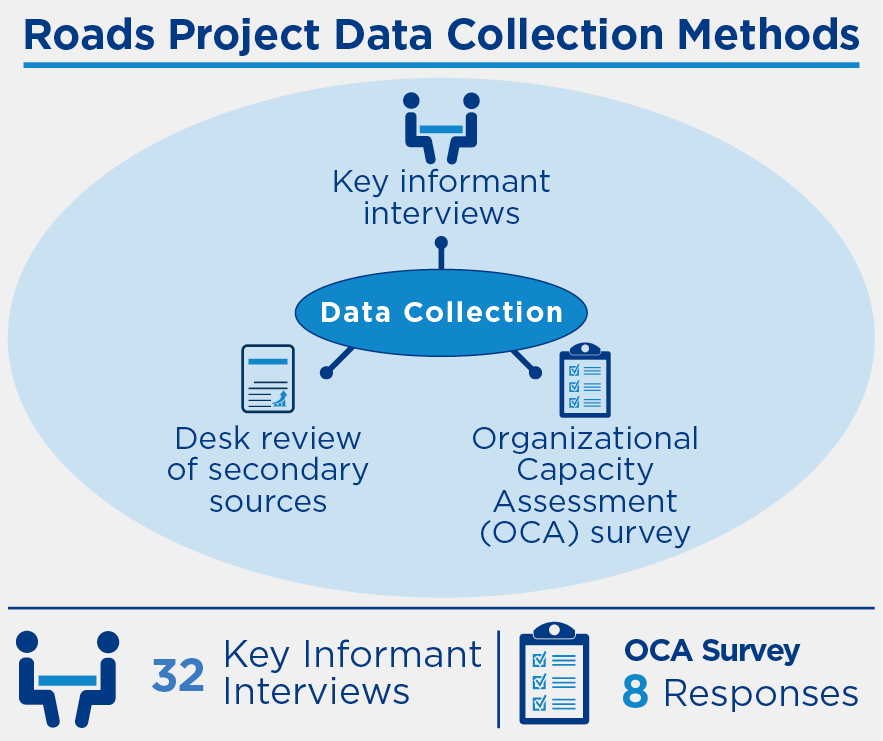
This final performance evaluation used two methodologies to answer questions surrounding project implementation (ex-post) and road maintenance practices (pre-post). Primary data was collected in August 2023-January 2024, an exposure period of about 31 months.
Key Informant Interviews. The evaluators conducted structured interviews with 38 out of 60 possible stakeholders at baseline and 32 out of 60 at endline from the Ministry of Public Works, the National Road Fund, donor agencies, and private sector road contractors.
Orgnizational Capacity Assessment (OCA) Survey. An online survey asked respondents how the Ministry of Public Works’ capacity affected road maintenance decisions and practices. At both baseline and endline, eight out of 20 Government of Liberia staff responsible for road maintenance responded.
Secondary Data. The evaluators analyzed budget data from the National Road Fund’s Annual Road Maintenance Expenditure Plans; the most recent plan available was from 2022. A major limitation of the evaluation is that the government never made key reports on actual road maintenance expenditures available to the evaluators.
Next Steps
A final study covering additional evaluation questions, including the project’s impact on beneficiaries, is underway and results will be available in 2026.
2024-002-2999