



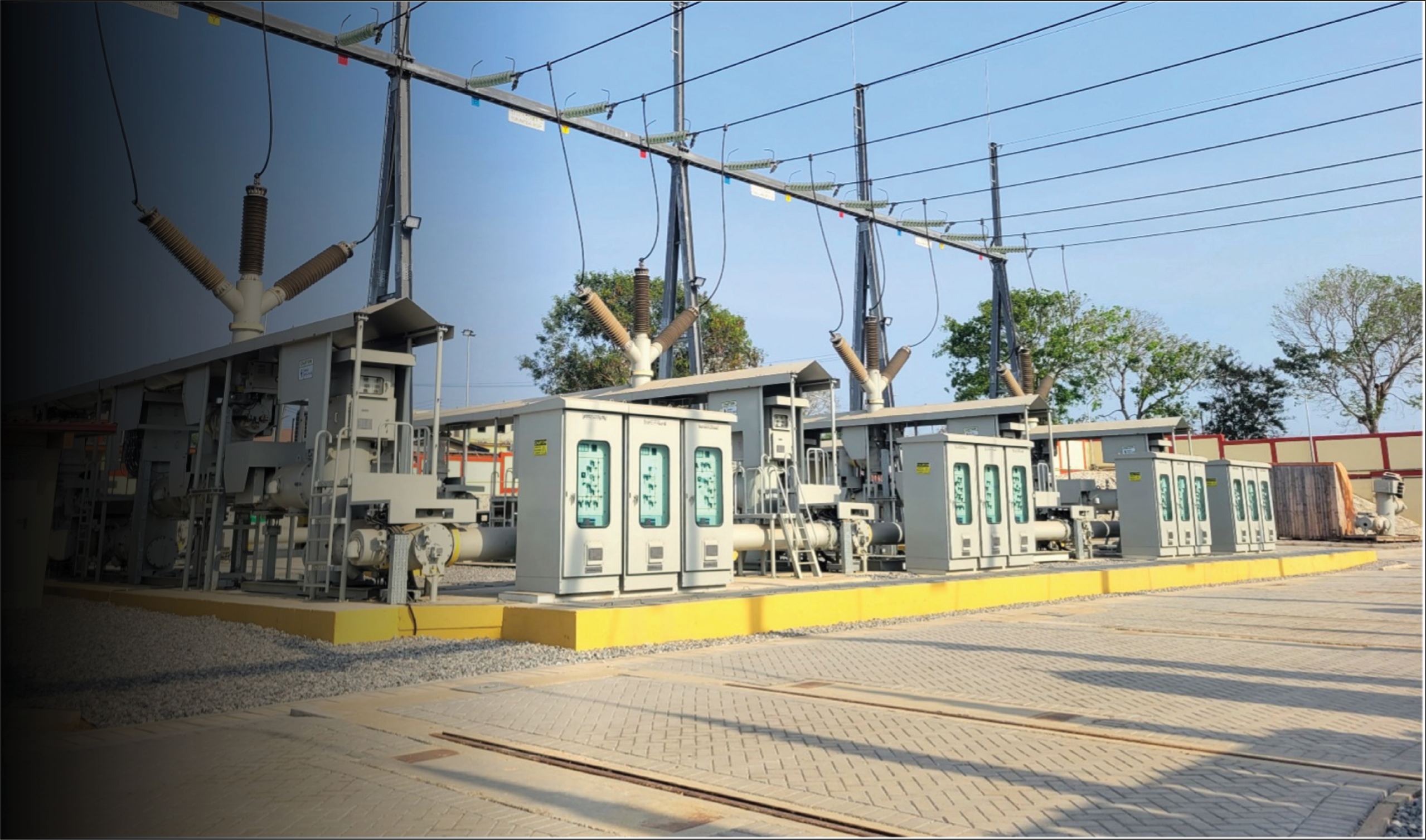
Program Overview
MCC’s $311 million Ghana Power Compact (2014-2022) funded the $221 million Electricity Company of Ghana (ECG) Financial and Operational Turnaround Project. The project aimed to improve the quality and reliability of electricity in Greater Accra through investments in new infrastructure and network improvements, and the transition of ECG operations and management to a private sector operator. These investments were based on the theory that improved infrastructure and utility management would result in cost-effective service delivery by the utility; reduced technical, commercial and collections losses; and improved creditworthiness of the utility.
Evaluator Description
MCC commissioned Mathematica to conduct an independent performance evaluation of the ECG Financial and Operational Turnaround Project. Full report results and learning https://evidence.mcc.gov/evaluations/index.php/catalog/250.
Key Findings
Private Sector Participation
- Private sector participation failed when the Government of Ghana terminated the concession agreement with the private sector operator, gutting the primary mechanism of change
- Termination of the concession agreement undermined expected reductions in commercial and collections losses and improvements in utility management and operations. It is also likely to weaken electricity quality and reliability in the long term.
Electricity Quality and Reliability
- The infrastructure investments had positive impacts on electricity quality and reliability.
- Some of the infrastructure investments improved reliability by reducing outages. One of the primary substations reduced outages by 44 hours per year and a combination of upgrades improved outages by 22 hours per year.
- All project interventions except one improved electricity quality by substantially reducing undervoltage with impact estimates ranging from 354 to 1,781 hours of undervoltage per year.
- Although the new bulk supply points (the largest project investments) did not affect observed outages, they will likely prevent future outages.
Evaluation Questions
This final performance was designed to answer the following two questions:
- 1
To what extent was the project implemented according to plan? - 2
Did the project achieve its stated objective of improving electricity quality and reliability, and the financial and operational performance of the utility? Why or why not?
Detailed Findings
Private Sector Participation
The centerpiece of the ECG Financial and Operational Turnaround Project was the transition of ECG operations and management to a private sector operator through a twenty-year concession agreement. However, shortly after the concessionaire took over the utility, the Government of Ghana terminated the agreement, gutting the project of its primary mechanism of impact. As a result, the project did not improve the utility’s financial health or operational performance. The failure of private sector participation also threatens the utility’s capacity to maintain the infrastructure and improve electricity quality and reliability over time. Since the cancellation of the agreement, the utility’s technical, commercial, and collection losses remain high, and the commercial and collection losses have generally worsened over time, threatening the longevity of the investments. MCC removed a substantial amount of compact funding since the funding was conditional on the Government’s follow-through on the concession.
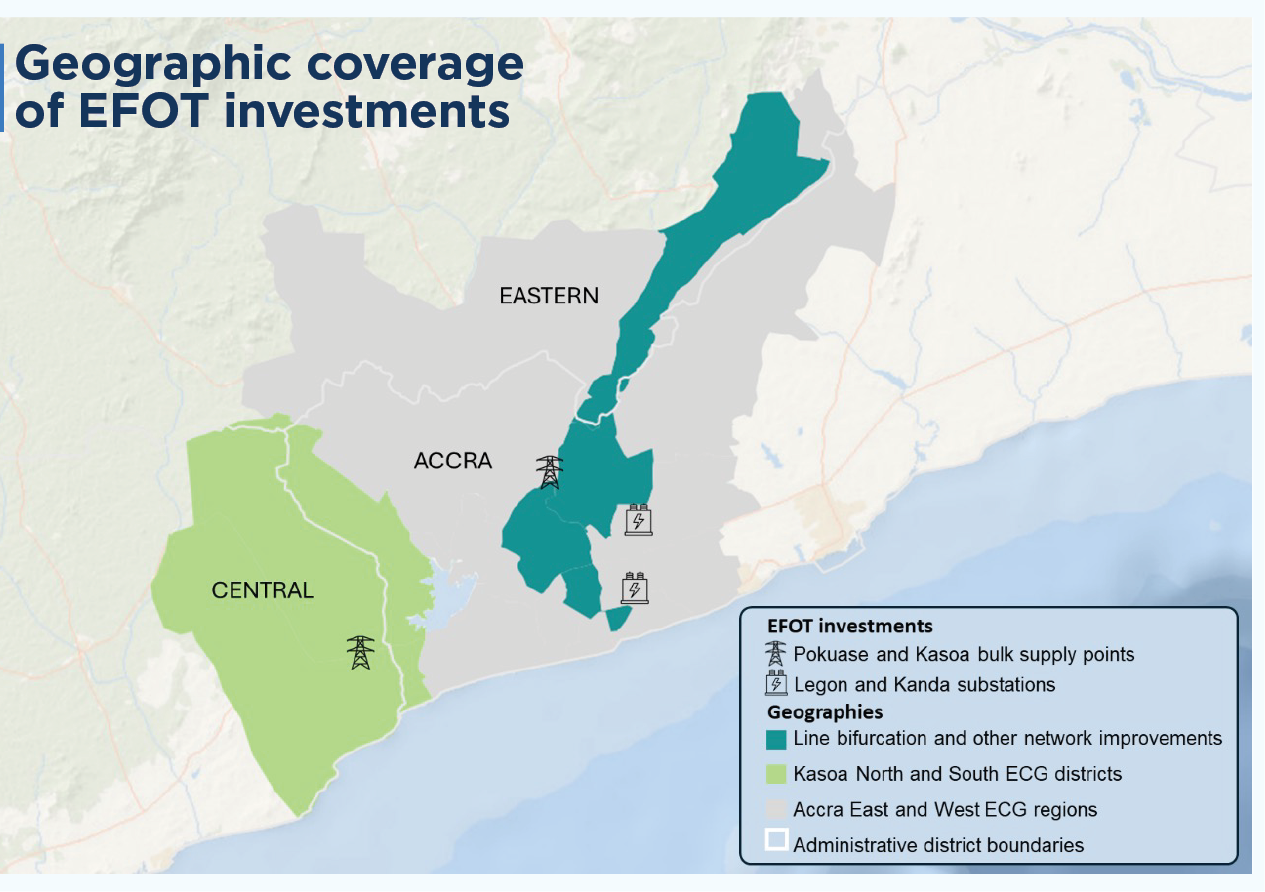
Geographic coverage of EFOT investments
Electricity Quality and Reliability
Despite declining financial health and operational performance of the utility, the infrastructure investments improved electricity quality and reliability. The compact funded the construction of two new bulk supply points at Pokuase and Kasoa, two new primary substations at Kanda and Legon, line bifurcation, and other network improvements.
The largest infrastructure investments funded under the project were the two new bulk supply points. Stakeholders involved in compact development expected that the bulk supply points would have a less visible effect on observed outages than other investments because they were a forward-looking investment, designed to prevent future outages by increasing capacity and ensuring that it remained above demand. As anticipated, the bulk supply points did not have an impact on outages through mid-year 2024, but analysis of electricity demand and bulk supply point capacity found that the new bulk supply points are likely to prevent outages that would have occurred in their absence as soon as 2025. This is earlier than expected, and the bulk supply points will likely continue to prevent outages well past 2029.
The Legon primary substation reduced outages by 44 hours per year. In addition, a combination of multiple upgrades in the areas benefiting from line bifurcation reduced outages by 22 hours per year. Outage levels in the intervention areas for these investments dropped by about 20 percent after construction. Interviews with energy sector stakeholders and medium and large enterprises, who experienced reductions in outages first-hand, validated these findings. Nearly all investments (except the Kanda primary substation) substantially reduced undervoltage, with impact estimates ranging from 354 to 1,781 hours per year, nearly eliminating undervoltage in the area served by the Kasoa bulk supply point, for example.
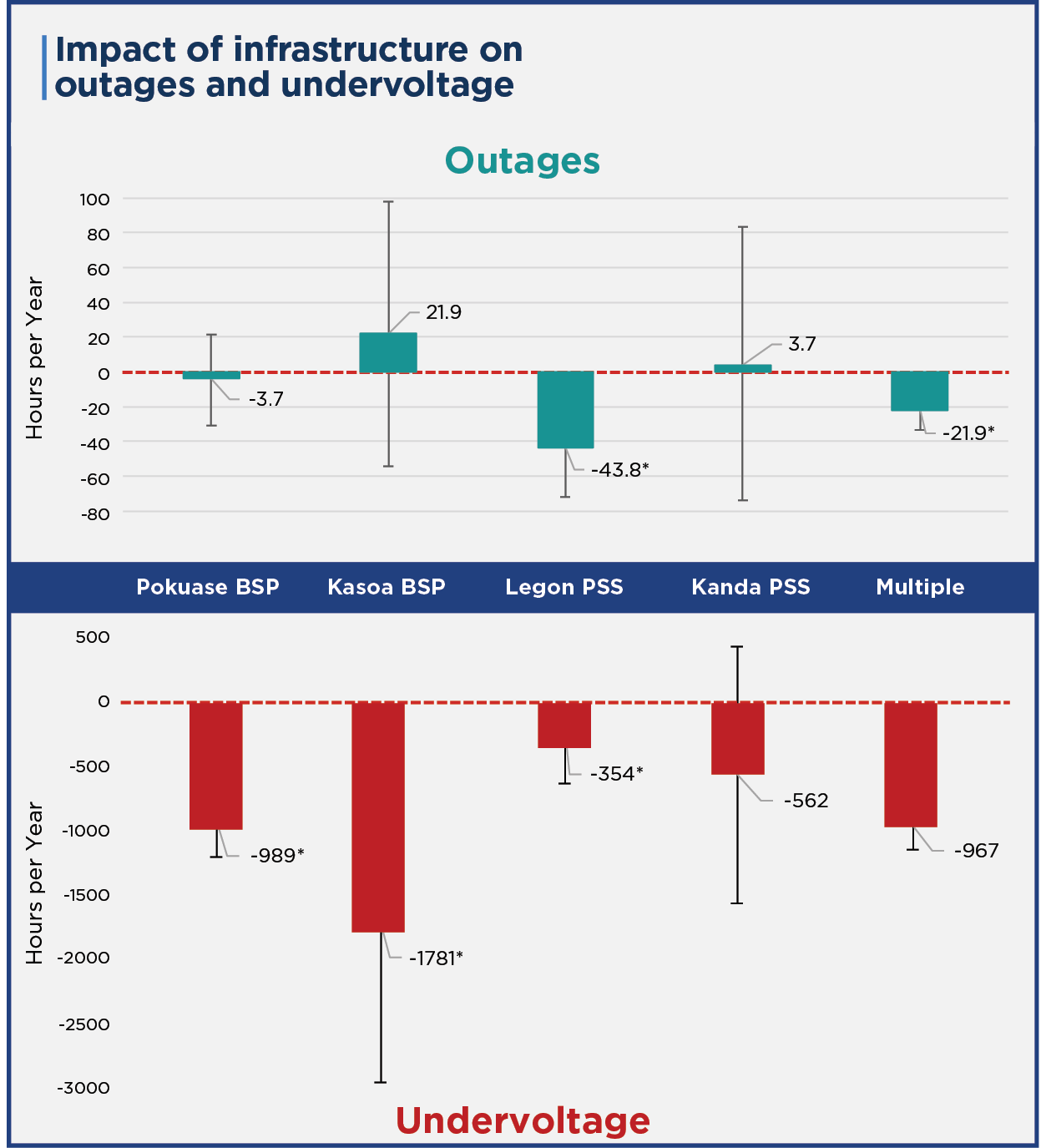
Impact of infrastructure on outages and undervoltage
While the evaluation was not designed to measure the impact of these improvements on economic outcomes for households and enterprises, results from a study conducted by University of California Berkley on the line bifurcation investments found that reductions in hours of undervoltage are unlikely to measurably improve economic outcomes of households or businesses. In qualitative interviews, medium and large enterprises reported experiencing frequent outages as of 2024, disrupting operations, causing lost sales and leading to dissatisfied customers. Consequently, they continue to invest in alternate energy sources as backup during outages and voltage fluctuations.
Economic Rate of Return
- 19%
Original ERR - 12%
Updated ERR
MCC considers a 10% economic rate of return (ERR) as the threshold to proceed with investment.
The original ERR incorporated benefits from improved management efficiency resulting from the private sector participation. After its cancellation, the updated ERR focused on electricity reliability improvements expected to come from the new infrastructure. While the evaluator did not recalculate the ERR, the evaluation findings suggest that the ERR is likely to be met in the short run because impacts on current and future outages were generally larger than expected. However, given the utility’s maintenance challenges and poor financial situation, electricity quality and reliability are likely to decline in the long-term, which will make it more difficult to achieve the original estimated ERR. A post-compact ERR is to be calculated in late 2025.
MCC Learning
Use tranche funding to mitigate risk. This funding structure proved to be an effective tool to hold back funding when the Government of Ghana canceled the private sector concession.
Consider alternative pathways to achieving critical utility reforms. These reforms did not ultimately succeed, which limited the effectiveness of the project despite successfully completing the infrastructure.
Plan for failure. Engage in scenario planning to identify options, should a key mechanism of change fail.
Obtain high-quality data on grid performance to inform intervention points and expected results. ECG’s data on electricity quality and reliability, which informed project design, did not capture the true volume of outages and voltage fluctuations, nor was it able to inform the most critical pain points in the grid.
Evaluation Methods
The evaluation used quasi-experimental methods complemented by qualitative analysis to capture project impacts around two to three years after completion of infrastructure investments. This exposure period is consistent with other literature from the electricity sector.
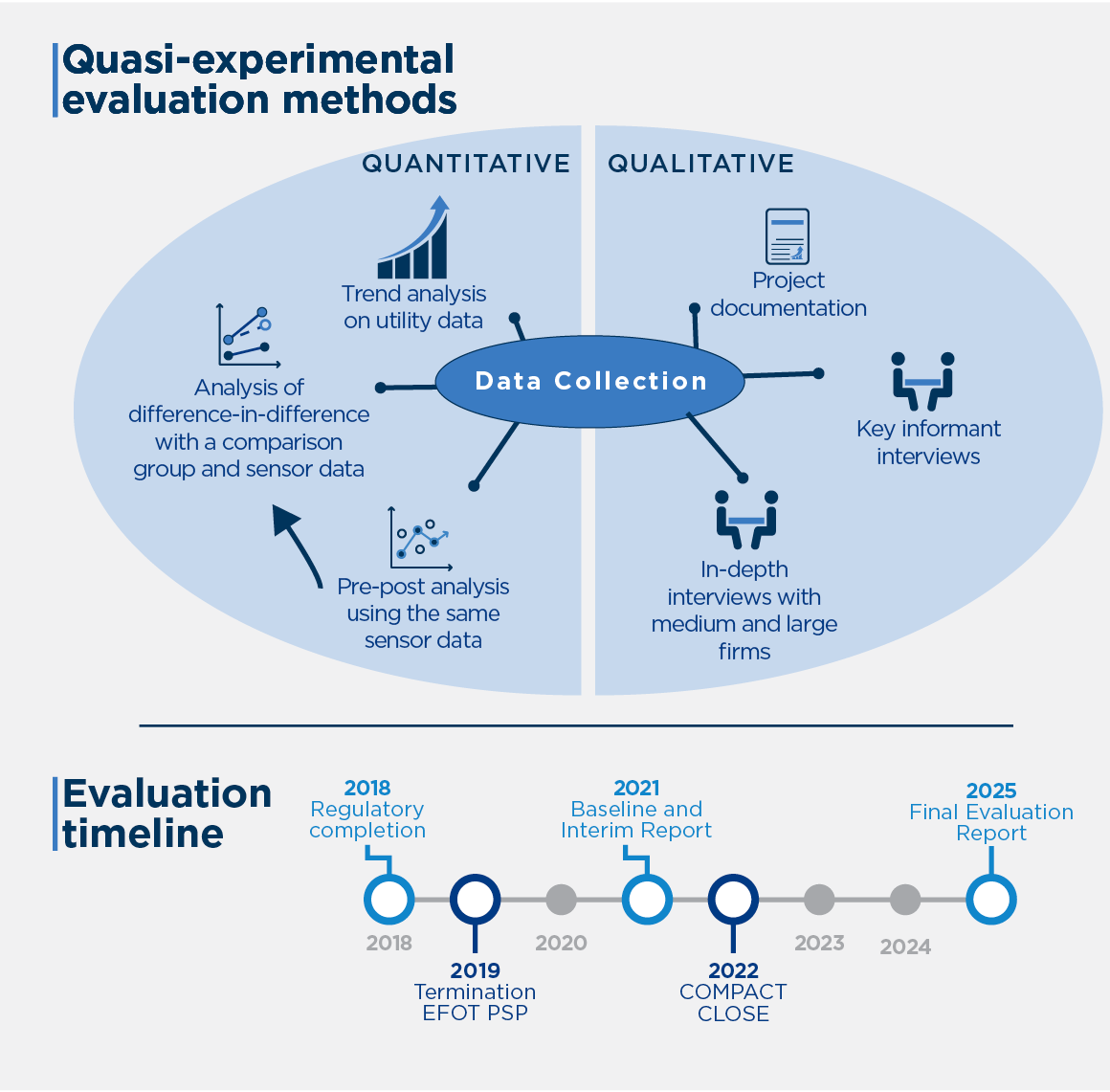
Quasi-experimental evaluation methods
The impact analysis involved three types of quantitative analyses. First, the evaluation used trend analysis on utility data to capture the overall changes in electricity quality and load, losses, and financial performance. A second analysis used difference-in-differences with a comparison group and sensor data to estimate the impacts of improved grid infrastructure on electricity outages and voltage fluctuations. To estimate the impacts of improved grid infrastructure, the analysis compared data from a pre- period and a post- period and compared districts likely to benefit directly from each grid investment to comparison districts. Lastly a pre-post analysis used the same sensor data to estimate effects of line bifurcation and other network improvements by comparing the period before the activation of the new infrastructure to the period after all interventions were fully activated. The results of the quantitative analyses were complemented by qualitative analysis of implementation documents, key informant interviews, and in-depth interviews with 20 medium and large enterprises.
2026-002-3143